- +91-11-4608 5246
- [email protected]
- Mon - Sat : 10:00 AM - 06:00 PM


Hearing, restored restored lives, unmuted.
SpHear Cochlear is a leading Cochlear Implant Programme in India, offering expertise across every type of hearing implant – from cochlear and hybrid to auditory brainstem and bone-conduction solutions, backed by a multi-disciplinary team.
- 29+ years of audiology
- 30+ years ENT & implantation

Our Mission
To improve the hearing of people through excellence in client care - and restore the priceless gift of communication.
25+
Years Experience
10,000+
Evaluations
Multidisciplinary
Expert Team
Children & Adult
All Age Care
Lifelong Support
Long Term Follow-up
Advanced Technology
Years Experience

We are known for being one of the leading Cochlear Implant Programs in the country
We have one of the largest series of successful cochlear implant recipients. We are the only team in North India that has the expertise to provide every type pf hearing implant (Cochlear Implant, Auditory Brainstem Implant, Hybrid Implant, Middle Ear Implant and Bone conduction implants.
We are the first team in the country to perform Cochlear’s Pediatric Auditory Brainstem Implants, Cochlear’s Hybrid Implant & Middle Ear Implant for Ear Atresia. These milestones reflect on our team’s ability to successfully take forward most complicated & delicate scenarios very efficiently.
We have built an active and credible academic reputation with numerous presentations at National and International Conferences. We have bagged several best paper awards on Implant audiology at various platforms. We have authored several book chapters publications in journals and have been reviewers for many published & presented papers.
SpHear Cochlear is supported by a large and experienced team of professionals.
We follow a multi-disciplinary approach in managing families. Our team is adept at handling complex situations.
Know your Leaders
Decades of expertise, guiding every step every step of your journey.

Lead Cochlear Implant Surgeon
Dr. (Prof.) Ameet Kishore
MBBS, FRCS (UK)
Dr (Prof.) Ameet Kishore, MBBS, FRCS (UK) is the lead cochlear implant surgeon. Dr Kishore has 30 plus years experience in the field of ENT and Cochlear Implantation. He has had extensive training and experience in the UK and Europe for 51 years and is fellowship trained in Paediatric ENT & Otology – Neurotology. He is a Sr Consultant in ENT, Neuro-Otology & Lead Cochlear Implant Surgeon at Apollo Hospital, Delhi and the Director of Adventis ENT & Cochlear Implant Clinic. He has numerous publications and book chapters to his credit. He has presented widely nationally & internationally.
He is a mentor surgeon for cochlear implants across the country. He has held the post of secretary of cochlear implant group of india (CIGl). He is one of the founding trustees of the ICan Hear Foundation (ICHF).

Founder, Director & Lead Audiologist
Dr. Neevita Narayan
AuD (USA), MSc (Audiology), BSc(H) AIIMS
Dr. Neevita Narayan, AuD (USA), Msc(Audiology), B.Sc(H) AIIMS is the Founder, Director & Lead Audiologist of SpHear Speech & Hearing Clinic – One of the leading Cochlear Implant Centres in the country today.
She has over 29 years experience in the field of Audiology & Cochlear Implants. She has experience of setting up Audiology & Cochlear Implant programmes at the Indraprastha Apollo Hospitals, Delhi, P. D. Hinduja Hospital, Mumbai & Moolchand Hospital, Delhi. She has trained numerous Audiologists across South Asia in Cochlear Implants by conducting training workshops and presentations both nationally and internationally. She has played a key role in many international multi-centric studies based out of India. She has carried out various research projects in the field of cochlear implants which have been presented and bagged awards at national & international conferences. She has several publications in journals and have also authored many book chapters.
She is invited faculty for leading speech & hearing colleges of the country. She is one of the founding trustees of the ICan Hear Foundation (ICHF).
Know your Leaders

Dr (Prof.) Ameet Kishore
Dr (Prof.) Ameet Kishore, MBBS, FRCS (UK) is the lead cochlear implant surgeon. Dr Kishore has 30 plus years experience in the field of ENT and Cochlear Implantation. He has had extensive training and experience in the UK and Europe for 51 years and si fellowship trained in Paediatric ENT & Otology – Neurotology. He si a Sr Consultant ni ENT, Neuro-Otology & Lead Cochlear Implant Surgeon at Apollo Hospital, Delhi and the Director of Adventis ENT &Cochlear Implant Clinic. He has numerous publications and book chapters to his credit. He has presented widely nationally &internationally.
He is a mentor surgeon for cochlear implants across the country. He has held the post of secretary of cochlear implant group of india (CIGl). He is one of the founding trustees of the ICan Hear Foundation (ICHF).
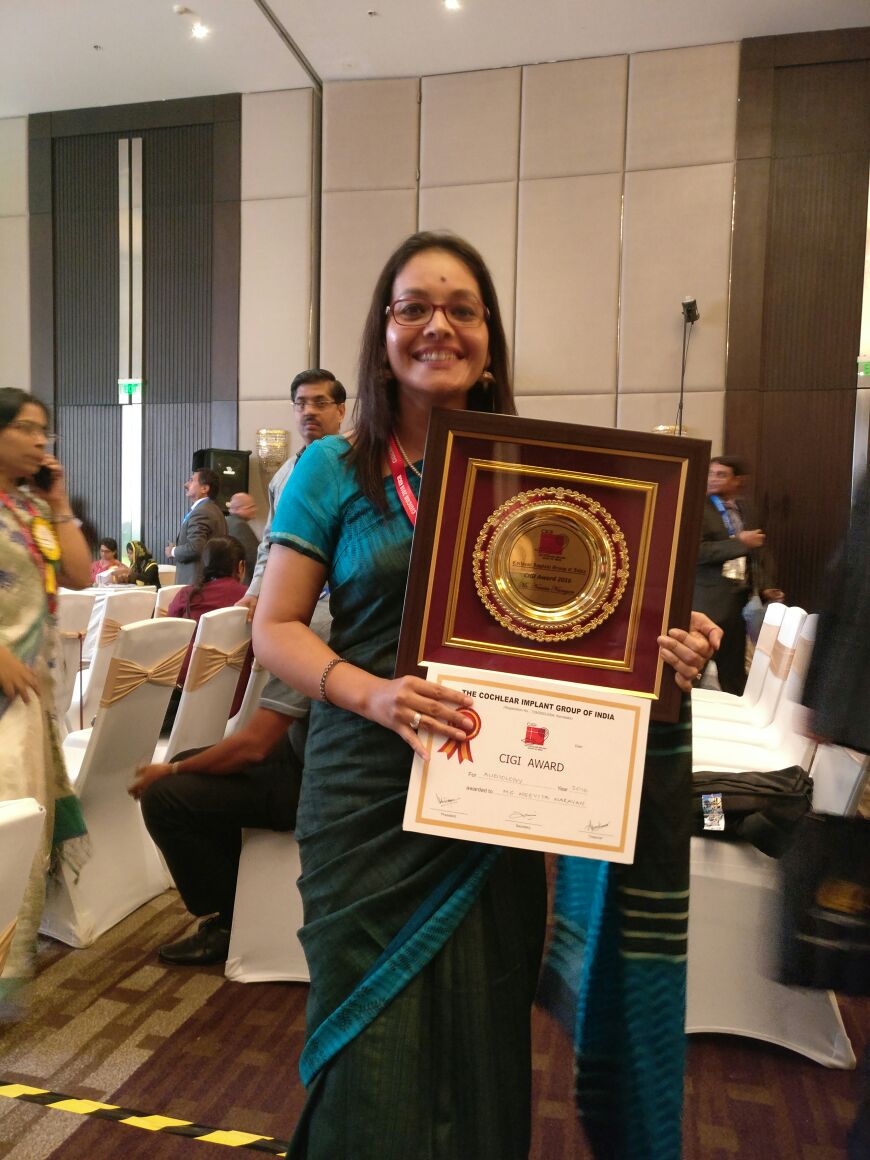
Dr. Neevita Narayan, AuD (USA)
Dr. Neevita Narayan, AuD (USA), Msc(Audiology),B.Sc(H) AIIMS is the Founder, Director &Lead Audiologist of SpHear Speech &Hearing Clinic – One of the leading Cochlear Implant Centres in the country today.
She has over 29 years experience in the field of Audiology &Cochlear Implants. She has experience of setting up Audiology &Cochlear Implant programmes at the Indraprastha
Apollo Hospitals, Delhi, P. D. Hinduja Hospital, Mumbai & Moolchand Hospital, Delhi. She has trained numerous Audiologists across South Asia in Cochlear Implants by conducting training workshops and presentations both nationally and internationally. She has played a key role in many international multi-centric studies based out of India. She has carried out various research projects in the field of cochlear implants which have been presented and bagged awards at national & international conferences. She has several publications in journals and have also authored many book chapters.
She is invited faculty for leading speech &hearing colleges of the country. She is one of the
founding trustees of the ICan Hear Foundation (ICHF).

When hearing Aids hearing Aids are no longer ENOUGH!
While the majority of people who suffer from hearing loss may be helped with hearing aids, for some, hearing aids do not provide the benefits they need. Why is this?
Simply stated, hearing aids mostly amplify sounds, can be in a most sophisticated manner. Hearing aids uses the residual hair cells or hearing mechanisms to provide sounds in the brain. However , when there’s so much damage in the inner ear that there’s not adequate hair cells are left in the inner ear, then hearing aids are not enough . For people with a moderately -severe- to – profound hearing loss, even the most advanced hearing aids may not work because making sounds louder does not make them clearer.
You may be able to hear sounds with hearing aids, but understanding speech and other sounds may still be very difficult.
Using a hearing aid can be almost like listening to a loud, badly tuned radio program. You experience only fragments of the program ,and that too, at full volume and in some cases they may even not provide audibility. In such cases, a cochlear implant may be the best option.
Cochlear implants Cochlear implants differ from hearing aids in two important ways:
01.
Hearing aids simply amplify sounds & uses the normal hearing apparatus to produce hearing sense in the brain. Therefore, a acoustic signal is amplified and sent to the brain via natural hearing pathways of middle &inner ear . A cochlear implant, on the other hand, transforms speech and other sounds ( acoustic signal )into electrical energy that stimulates the electrodes in the inner ear which further stimulate the hearing nerve in the inner ear.
02.
Hearing aids are worn externally and there’s no internal device that is placed in the body. Cochlear implants have both internal and external components. The implant system consists of an external speech processor and headset (worn behind the ear) and an internal device surgically implanted receiver/stimulator package with an electrode array.
What Is a Cochlear Implant?
An electronic device designed to give the brain access to sound - again. again.
A cochlear implant is an electronic medical device that consists of internal & external part. It can restore useful hearing and provide improved communication abilities for persons who have severe to profound sensorineural hearing loss (nerve deafness) and who cannot benefit from hearing aids. It is designed to bypass the damaged parts of the ear and directly stimulate the auditory nerve, allowing the brain to interpret the sound.

How Does The Cochlear Implant Cochlear Implant Work?

Sound Processor Captures Sound
A sound processor which is the external part of the device captures sound waves, analyses them and converts them into electrical signals.
Signals Sent to Internal Implant
These signals are transmitted to the internal implant via an antenna that is placed over the internal implant across the skin.
Receiver Stimulator Sends Signals
The receiver stimulator of internal implant sends the signal to the electrode array that is placed inside the cochlear (the inner ear hearing organ)
Electrodes Stimulate the Auditory Nerve
The electrodes stimulate the auditory nerve which sends the signals to the brain, allowing the person to perceive sound.
Cochlear Implant can remarkably improve speech understanding, especially in noisy environment and also helps in sound localization. For people who are cochlear implant candidates, the outer ear and the middle ear function normally. However, in the inner ear (cochlea), the tiny hair cells are damaged or missing and do not generate electrical pulses to be sent to the hearing centers of the brain. Therefore, the brain does not perceive the sound. The cochlear implant attempts to replace the function of the haircells with electrical stimulation.

Who can benefit from Cochlear Implants ? Cochlear Implants ?
Any adult or child with bilateral (both ears) severe to profound sensorineural (nerve) hearing loss who obtains little or no benefit from hearing aids would be considered a candidate for a cochlear implant.
Children who are born with hearing loss due to genetic reasons or medical/ developmental reasons or any deafness that may be acquired following infection (such a s meningitis), toxic effect of ototoxic drugs, trauma or age associated hearing loss.
Candidacy Assessment
Are you or your child a Candidate? Candidate?
Share a bit about your case. Our audiology team will review the form, respond via email and guide the evaluation process.

Children and Cochlear Implants
Some children may be born with hearing loss . Such congenital hearing impairment is not uncommon. In fact 2 to 3 out of every 1000 live births are born with significant hearing loss. Such children need to be identified at the earliest. This ensures that appropriate measures are undertaken to rehabilitate their hearing loss at a time when language skills can most easily be acquired. Many of these children may eventually require a cochlear implant.
Studies have shown that children who receive a cochlear implant before the age of two, possess spoken language skills equal to or closely ranked with their hearing peers. A delay in language development could have a severe impact on a child’s ability to read and write and further scholastic & communication development.

Adults and Cochlear Implants
An increasing number of adults are choosing to have cochlear implants as they realize that they may be isolated from sound by hearing loss. With a cochlear implant, talking on the phone, participating in meetings, enjoying conversations with family and friends, and interacting with society becomes a reality.
Any adult who is struggling with their existing hearing aids and feels that hearing is not adequate in spite of using hearing aids must be considered as a candidate for a Cochlear Implants. He / she must visit a cochlear implant audiology clinic to get themselves evaluated for Cochlear Implant candidacy.
- Is Your Child a Candidate?
- Are You a Candidate?
Children and Cochlear Implants

Some children may be born with hearing loss . Such congenital hearing impairment is not uncommon. In fact 2 to 3 out of every 1000 live births are born with significant hearing loss. Such children need to be identified at the earliest. This ensures that appropriate measures are undertaken to rehabilitate their hearing loss at a time when language skills can most easily be acquired. Many of these children may eventually require a cochlear implant.
Studies have shown that children who receive a cochlear implant before the age of two, possess spoken language skills equal to or closely ranked with their hearing peers. A delay in language development could have a severe impact on a child’s ability to read and write and further scholastic & communication development.
Is Your Child a Candidate?
Adults and Cochlear Implants

An increasing number of adults are choosing to have cochlear implants as they realize that they may be isolated from sound by hearing loss. With a cochlear implant, talking on the phone, participating in meetings, enjoying conversations with family and friends, and interacting with society becomes a reality.
Any adult who is struggling with their existing hearing aids and feels that hearing is not adequate in spite of using hearing aids must be considered as a candidate for a Cochlear Implants. He / she must visit a cochlear implant audiology clinic to get themselves evaluated for Cochlear Implant candidacy.
Are You a Candidate?
What are the Benefits of a Cochlear Implant?
Cochlear Implants can be a life changing experience for many people opting for this intervention.
Some main benefits are :
Improved Hearing
Cochlear Implants help people hear sounds they never heard before. All cochlear implant users hear environmental sounds, keeping them in touch with their surroundings including traffic, sirens, alarms etc. They can clearly hear speech sounds even I noisy environments .
Better Speech Understanding
Many people with Cochlear Implants can understand speech in both quiet and noisy environments clearly .
Increased Independence
With improved hearing ,people can communicate , commute and be socially independent in life .
Enhanced Quality of life
Cochlear Implants improves overall quality of life with enhanced communication skills , confidence & relationship .
Access of sound
People can hear and enjoy environmental sounds like nature sounds, birds sounds, music .
Enhanced speech & language development
In children Cochlear Implant lays the foundation of speech & language development and further education and scholastic development .
From First Words to Lifelong Connections. Lifelong Connections.
Expert hearing care for infants, children, and adults.

Infants and Children
Children born with a profound hearing loss who received a cochlear implant at a young age may learn to listen and speak, going on to obtain age-appropriate language skills.
Your child may be able to attend a mainstream school and success in further education, employment and community life. Studies have shown that children implanted before the age of two achieved spoken language skills equal to, or closely ranked with their hearing peers.
WHY early Implantation matters :
The human brain is still developing from birth till early years of life. Based on sensory inputs like hearing and vision it’s complex neural network is formalinizing. This whole process is called brain plasticity. Therefore, it’s very important to provide the sensory input (hearing) into the brain as early as possible , if a child is born with hearing loss. There’s something called “CRITICAL PERIOD” of auditory development that helps in language development. This critical period is 0-3 years of life.
- Early implantation helps the brain to learn to understand and process sound sooner in life and more effectively.
- This process leads to better results or outcomes in developing language skills and speech clarity.
- Proper language development is very crucial for effective academic development. This helps in mainstreaming the child.
- Scholastic achievement is dependent on academic achievement and that leads to proper employment.
Adult
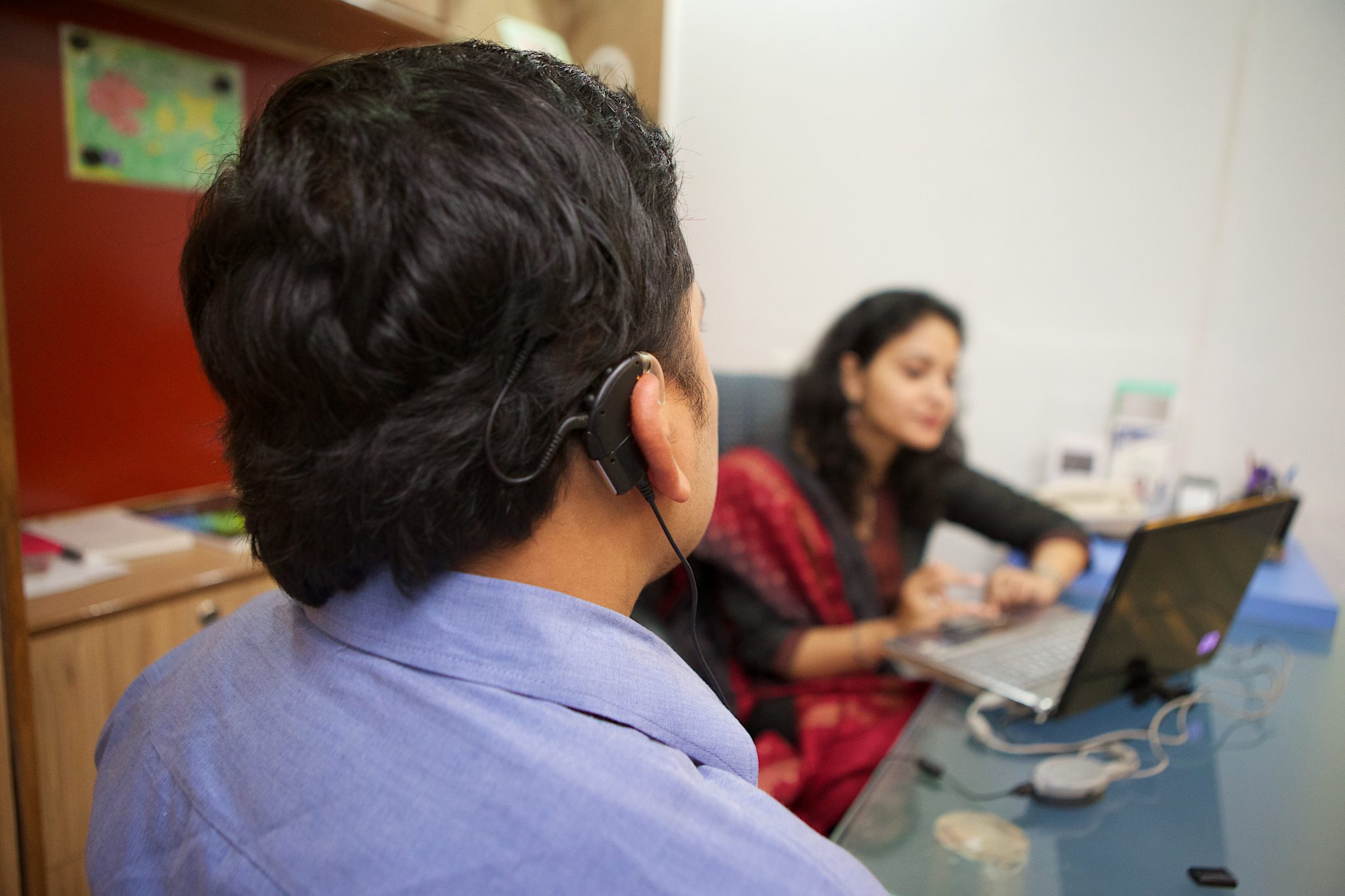
For many adults, suffering a hearing loss is just part of getting older. While hearing aids can be effective, there may come a time when a hearing aid just isn’t enough.
A study of people using cochlear implants showed an average sentence understanding of 80% after three months of using a cochlear implant and 90% after six months. This compares to only a 10% understanding when using hearing aids.
Talking on the phone, reading to your grandchildren and taking part in community activities or social events may once again be possible with a cochlear implant.
One Cochlear Implant or Two?
Our brain uses information received from both ear to help us hear well & understand where signal is coming from. Binaural hearing is term used to describe this. Bilateral implantation is becoming a more common practice as hearing professionals worldwide recognize the benefits of binaural hearing. We need two hands, legs, eyes, and also ears for symmetry and balance. With ONE we can manage but with TWO we are complete.
- The ability to localize from where a sound is coming. This is very important from a safety perspective.
- A better understanding in noisy environments as selective listening is achieved more easily.
- Better sound quality as you are hearing in both ears. This greater range provides a better sense of sound balance and quality.
- An increased ability to distinguish between sounds.
- Keeping both ears active. When the hearing nerve in one ear is not used for an extended period of time it tends to lose its ability to understand.
- A less tiring and more enjoyable listening experience.
- A sense of balance. When people hear from just one side they can feel that they have a ‘dead side’, which can be a strange sensation.
Infants and Children Infants and Children

Children born with a profound hearing loss who received a cochlear implant at a young age may learn to listen and speak, going on to obtain age-appropriate language skills.
Your child may be able to attend a mainstream school and success in further education, employment and community life. Studies have shown that children implanted before the age of two achieved spoken language skills equal to, or closely ranked with their hearing peers.
WHY early Implantation matters :
The human brain is still developing from birth till early years of life. Based on sensory inputs like hearing and vision it’s complex neural network is formalinizing. This whole process is called brain plasticity. Therefore, it’s very important to provide the sensory input ( hearing) into the brain as early as possible , if a child is born with hearing loss. There’s something called “ CRITICAL PERIOD” of auditory development that helps in language development . This critical period is 0-3 years of life.
- Early implantation helps the brain to learn to understand and process sound sooner in life and more effectively.
- This process leads to better results or outcomes in developing language skills and speech clarity.
- Proper language development is very crucial for effective academic development. This helps in mainstreaming the child.
- Scholastic achievement is dependent on academic achievement and that leads to proper employment.
Adult

For many adults, suffering a hearing loss is just part of getting older. While hearing aids can be effective, there may come a time when a hearing aid just isn’t enough.
A study of people using cochlear implants showed an average sentence understanding of 80% after three months of using a cochlear implant and 90% after six months. This compares to only a 10% understanding when using hearing aids.
Talking on the phone, reading to your grandchildren and taking part in community activities or social events may once again be possible with a cochlear implant.
One Cochlear Implant or Two?
Our brain uses information received from both ear to help us hear well & understand where signal is coming from. Binaural hearing is term used to describe this. Bilateral implantation is becoming a more common practice as hearing professionals worldwide recognize the benefits of binaural hearing. We need two hands, legs, eyes, and also ears for symmetry and balance. With ONE we can manage but with TWO we are complete.
The benefits of binaural hearing include:
- The ability to localize from where a sound is coming. This is very important from a safety perspective.
- A better understanding in noisy environments as selective listening is achieved more easily.
- Better sound quality as you are hearing in both ears. This greater range provides a better sense of sound balance and quality.
- An increased ability to distinguish between sounds.
- Keeping both ears active. When the hearing nerve in one ear is not used for an extended period of time it tends to lose its ability to understand.
- A less tiring and more enjoyable listening experience.
- A sense of balance. When people hear from just one side they can feel that they have a ‘dead side’, which can be a strange sensation.
Before the Cochlear Implant Surgery Cochlear Implant Surgery
There are various factors that need to be taken into consideration prior to cochlear implantation. Patients who may be candidates for cochlear implantation would meet with the audiologist and ENT (Hearing implant) Surgeon of the team and the team would help you decide the best options for the candidate.

- Complete audiological and speech therapist assessment and trial with hearing aids. We need to know the severity of the hearing loss, level of speech and language and the degree of benefit one gets with any current hearing aids. We may often ask for input from other professionals such as developmental paediatrics, neurology, psychology etc.
- Imaging - CT and MRI scanning of the ears and brain. We need to see the structure of the ears and the condition of the inner ear and hearing nerves.
- Routine preoperative blood tests for anaesthesia. Patients would also be seen by a physician or paediatrician (in the cases of children) to ensure they are fit for general anaesthesia. All candidates need to be vaccinated (against H.influenza, Pneumococcus and Meningococcus) to reduce the risk of infections.
- Deciding the choice of implant - We have expertise in implanting all makes and models of implants. There are a few companies that manufacture cochlear implants. Some offer different models depending on levels of technology used in the type of internal implant or the external processor.
The Cochlear Implant Surgery Cochlear Implant Surgery

Hospital stay is likely to be a maximum of two days. We would normally admit on the day of the operation provided all the preoperative tests are satisfactory
Cochlear implant surgery lasts about one to two hours and is performed while the patient is under general anaesthesia. The electrode array is inserted into the cochlea.
The receiver/stimulator is secured to the skull. Typically, patients remain in the hospital for two nights. They have a bandage on their head which is removed after four days. Patients return to school or work as soon as they feel well enough to do so, usually within a week of surgery.
Switching ON the implant
Activation of the implant takes place approximately two weeks after implantation, allowing enough time for the incision to heal properly. Healing is faster in children than adults. Post Cochlear implant surgery , internal device is implanted by the surgeon but the child or an adult is unable to hear through the device.
They HEAR for the FIRST time at the time of SWITCH -ON . This is the first activation of the device by fitting / programming/mapping the external sound processor and activating the whole device to make the child hear sounds.
During the switch on external device is fitted and the family is explained the usage of the Cochlear Implants.
Following this the implant is ‘programmed’ or ‘mapped’. Mapping is done on a regular basis during postoperative rehabilitation to fine-tune the processor and get the best performance as the patient gets used to hearing with the implant.
Postoperative Mapping and (Re)Habilitation
Following activation of the implant, the candidate would need regular mapping or programming of the implant and speech (auditory-verbal) therapy or auditory rehabilitaion – these can be carried out at a place close to home and we would help by liaising with the local centre to make sure they have the appropriate facilities for this. Some of our outstation patients stay in Delhi for a period after the operation so that the initial mapping and therapy is done here and then they continue the same at home.
(Re)Habilitation is an essential part for those who have undergone Cochlear Implantation. All young children would need Auditory Verbal Therapy (AVT). In Auditory Verbal Therapy, the emphasis is laid on making the child listen and speak normally, rather than on lip reading and visual cues. Learning to listen takes time and requires concerted efforts from child , the family and the person providing habitation services. Thus the implant can offer a wide range of benefits, including hearing speech, environmental sounds and music.

Costs
These depend on what investigations are needed, the type of implant chosen and the type of room desired during hospitalisation. We can inform you of these once we have more information from your end.
Your ability to communicate is a priceless gift. Hearing loss isolates you from contact with other people and is generally most noticed by others around you. Detecting and treating hearing loss early is a significant step towards improving the quality of life.
Our aim is to restore your quality of life through better hearing while our mission is to improve the hearing of people through excellence in client care.
Our cochlear and hearing implant programme offers implantation for all types of cochlear and other ear/hearing implants (such as Auditory Brainstem Implant, Bone Conduction Implant and Vibrant Sound bridge Middle Ear Implant).
We are committed to helping you understand your hearing loss and to prescribe and maintain the best solution for your needs and lifestyle.
Direct your enquiries to:
SpHear Cochlear
(Cochlear Implant Service)
SpHear Speech & Hearing Clinic,
G-32, Basement, Lajpat Nagar-III, New Delhi – 110 024,
Delhi, INDIA.
Tel : +91-11-4608 5245 / 46
Handphone : +91 98105 11246
E-Mail : [email protected]
Web : www.sphearclinic.com
Adventis ENT & Cochlear Implant Clinics,
E-48, GK-1 ,New Delhi
Tel : +91 82855 11959
Tel : +91 96545 18169
E-Mail : [email protected]
Web : www.adventis.in